
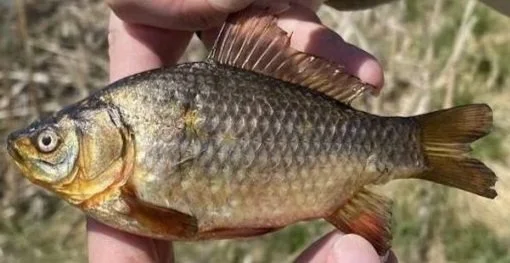
Prussian Carp
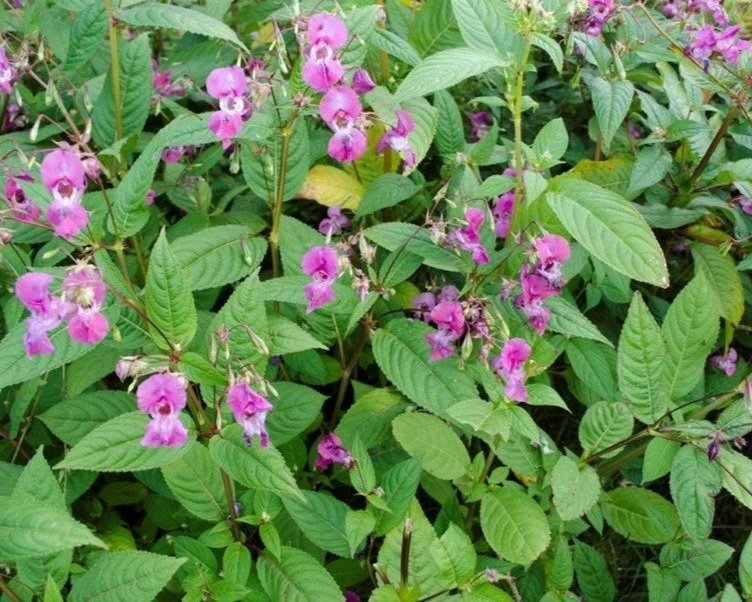
Himalayan Balsam
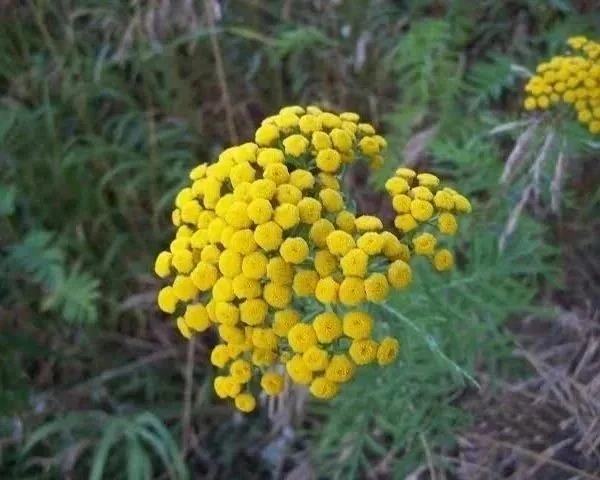
Common Tansy
Himalayan balsam (Impatiens glandulifera), also known as policeman’s helmet, is an invasive plant that thrives in moist areas, particularly along riverbanks, wetlands, and shorelines. It can grow up to three metres tall and is recognizable by its hollow, reddish stems, serrated leaves, and pink, purple, or white helmet-shaped flowers. It spreads rapidly through seed pods that burst when disturbed, allowing it to form dense stands that crowd out native plants, reduce biodiversity, and increase soil erosion along waterways.
How to deal with it: Small infestations can be controlled by carefully hand-pulling plants and removing their roots before seeds develop. Larger patches may require repeated cutting throughout the growing season to prevent flowering and seed production. Bag and dispose of plant material according to local guidelines, never compost it, and avoid disturbing mature seed pods. Monitor treated areas for regrowth and report sightings to Alberta’s invasive species authorities. Consistent control is essential to prevent Himalayan balsam from spreading and to protect native vegetation and healthy waterways.
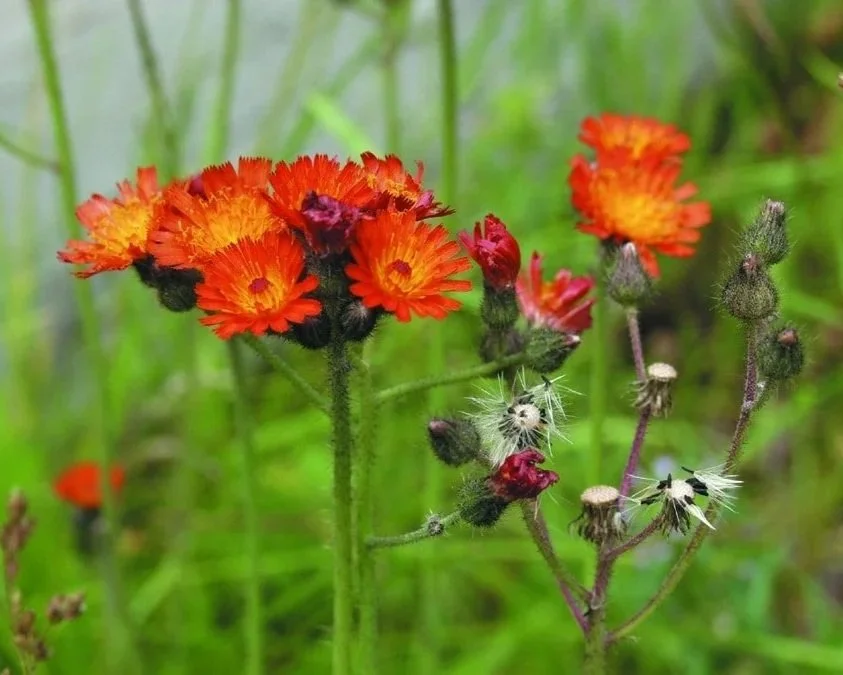
Orange Hawkeed
Prussian carp are an invasive freshwater fish that pose a growing threat to Alberta’s aquatic ecosystems. They reproduce rapidly, tolerate a wide range of environmental conditions, and can outcompete native fish for food and habitat. Their ability to establish large populations makes them difficult to control and can negatively affect water quality, biodiversity, and the overall health of local waterways.
How to deal with Prussian carp: Prevention is the best defence. Never release live fish or aquarium water into lakes, rivers, or ponds, and clean and dry fishing gear before moving between waterbodies. If you catch a suspected Prussian carp in Alberta, confirm its identification before taking action. If confirmed, follow Alberta’s “Catch It, Kill It” guidance: do not release it back into the water, and dispose of it properly or keep it for consumption. Report suspected sightings to the Aquatic Invasive Species Hotline at 1-855-336-2628. Everyone can help prevent the spread and protect Alberta’s native fish and aquatic habitats.
Common tansy (Tanacetum vulgare) is an invasive perennial plant originally introduced from Europe and Asia. It is commonly found along roadsides, in fields, and near waterways. It can grow up to 1.5 metres tall and is recognizable by its clusters of bright yellow, button-shaped flowers, fern-like leaves, and strong smell when crushed. Common tansy spreads through seeds and underground roots, allowing it to form dense patches that compete with native plants and reduce biodiversity. It can also be toxic to humans and livestock if eaten.
How to deal with it: Small infestations can be managed by carefully digging out the entire root system before the plant produces seeds. Wear gloves and avoid spreading seeds or root fragments. Repeated cutting or mowing can help reduce seed production, but follow-up treatment is necessary because the plant can regrow from its roots. Dispose of removed plants in the garbage rather than composting them, and monitor the area for regrowth. In Alberta, common tansy is classified as a noxious weed, meaning it must be controlled under provincial regulations.
Orange hawkweed (Pilosella aurantiaca), also known as devil’s paintbrush, is an invasive perennial plant originally from Europe. It is easily recognized by its bright orange-red flowers, hairy stems, and low-growing rosettes of leaves. It spreads through seeds, above-ground runners, and underground roots, forming dense patches that crowd out native plants and reduce biodiversity. In Alberta, orange hawkweed is classified as a noxious weed and must be controlled.
How to get rid of it: For small infestations, carefully dig out the plants, making sure to remove the roots and runners to prevent regrowth. Remove flower heads and buds before seeds develop, and place all plant material in the garbage rather than composting it. Avoid rototilling or disturbing the soil, as this can spread root fragments and runners. Check the area regularly for new growth and restore bare ground with desirable vegetation to help prevent reinfestation. For larger infestations, consult local weed-control authorities about appropriate herbicide treatments.
Black Knot
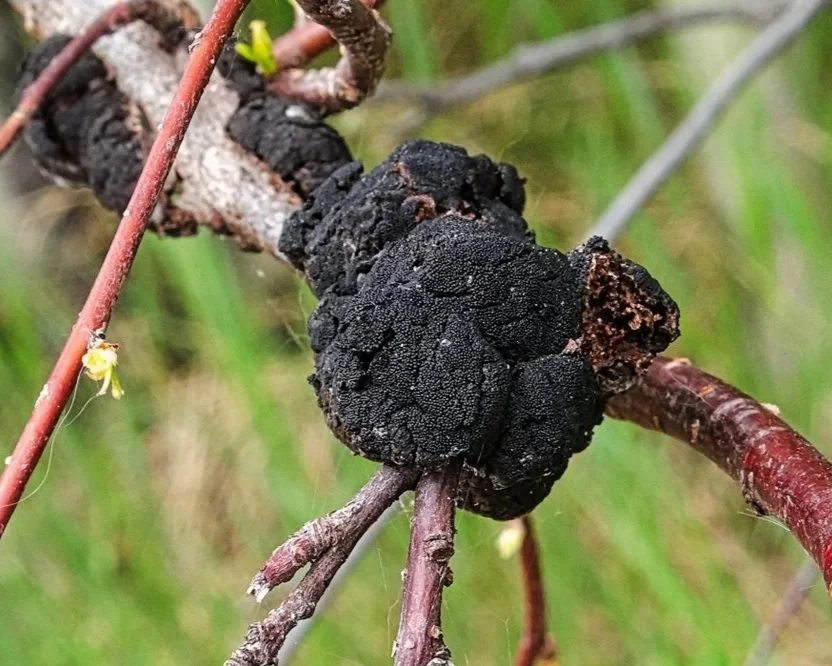
Black knot is a fungal disease caused by Apiosporina morbosa that mainly affects trees in the cherry and plum family, including Mayday trees, chokecherries, and ornamental plums. It is easily recognized by the rough, swollen, black growths that form along branches and twigs. If left untreated, the disease can spread, deform branches, reduce tree growth, and eventually contribute to the tree’s death.
How to get rid of it: The best way to control black knot is to prune infected branches during late fall, winter, or early spring while the tree is dormant. Cut at least 15–20 cm (6–8 inches) below the visible knot, preferably back to a healthy branch collar. Disinfect pruning tools between cuts to prevent spreading the fungus, and seal infected branches in bags for disposal in the garbage rather than composting them. Inspect trees regularly for new infections. If the disease has spread to the main trunk or affects a large portion of the tree, consult a certified arborist for advice. Early detection and consistent pruning are key to protecting healthy trees and limiting the spread of black knot.